

Quick Summary: A daily SIP calculator helps you estimate returns from investing a fixed amount every day in mutual funds. With just ₹100 daily (₹3,000/month), you could build ₹14+ lakhs in 15 years at 12% returns. This guide explains how daily SIPs work, compares them with monthly SIPs, and helps you choose the right investment approach.
What is a Daily SIP Calculator?
A Daily SIP Calculator is a free online tool that calculates the future value of your daily mutual fund investments. It shows you how much wealth you can build by investing a small, fixed amount every single day.
Key Features:
Calculate maturity amount based on daily investments
See year-by-year growth projections
Compare different investment amounts and time periods
Understand the power of daily compounding
Plan for specific financial goals
Who Should Use It?
Freelancers with irregular monthly income
Young professionals starting their investment journey
Anyone wanting to invest small amounts regularly
Investors seeking better rupee-cost averaging
People who prefer daily financial discipline over monthly commitments
Also Read: Mutual Fund Calculator: Your Guide to Smarter Investment Planning
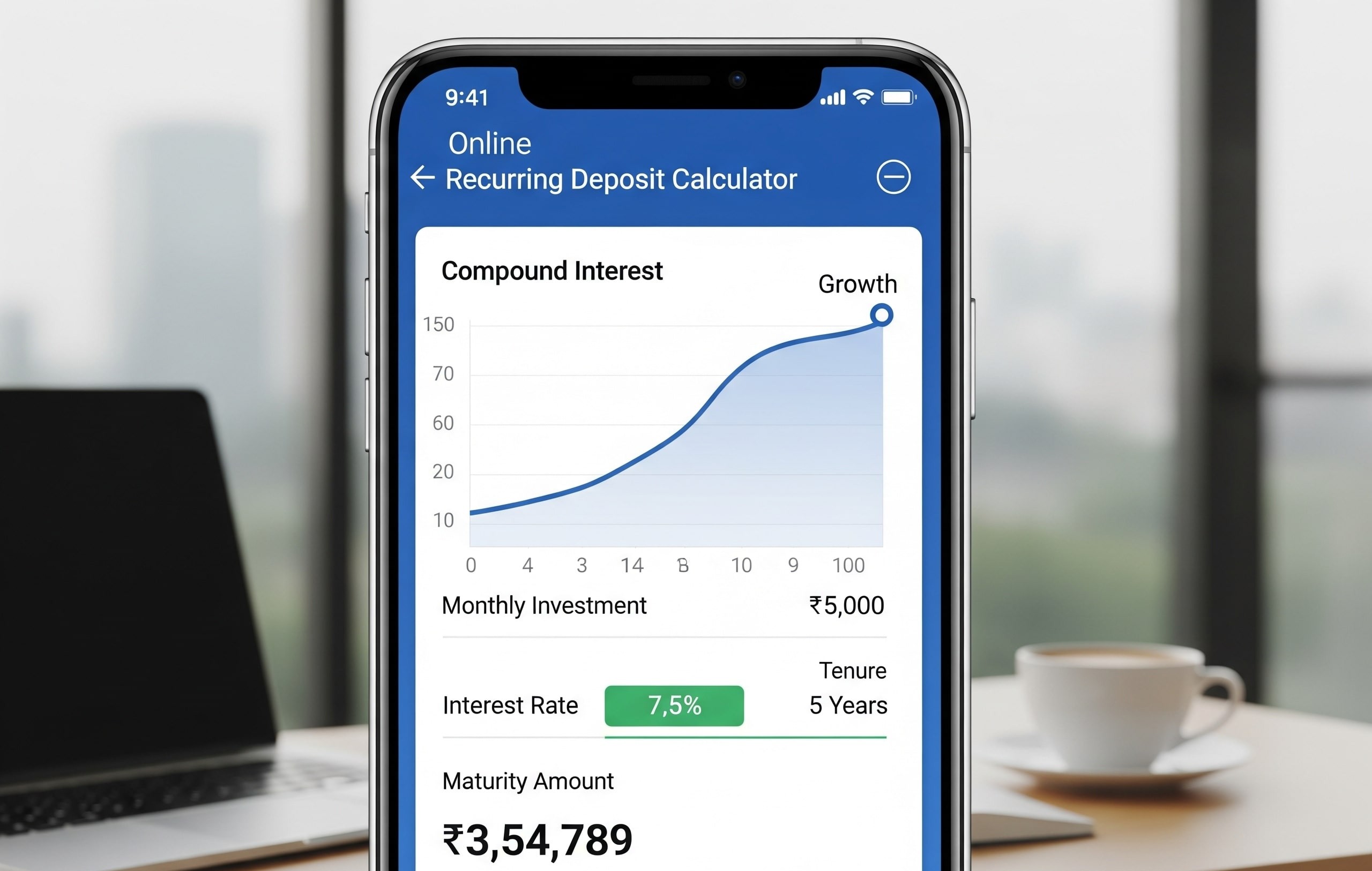
Daily SIP Calculator: Try It Now
Interactive Calculator Interface – Placeholder
Investment Details:
Daily Investment Amount: ₹_____ (Min: ₹100)
Expected Annual Return: ____% (Suggested: 10-12%)
Investment Period: _____ years
Results:
Total Investment: ₹_____
Expected Returns: ₹_____
Maturity Value: ₹_____
Note: Returns are indicative based on assumed rate. Actual returns may vary.
How Does Daily SIP Work?
Daily SIP (Systematic Investment Plan) automatically deducts a fixed amount from your bank account every business day and invests it in your chosen mutual fund.
Example:
Investment: ₹200/day
Monthly equivalent: ₹6,000
Annual investment: ₹72,000
Investment period: 10 years
Expected return: 12% p.a.
Results:
Total invested: ₹7,20,000
Expected maturity value: ₹14,13,000
Wealth created: ₹6,93,000
Daily SIP Formula Explained
The daily SIP calculator uses the future value of annuity formula:
FV = P × [(1 + r)^n – 1] / r × (1 + r)
Where:
FV = Future Value (maturity amount)
P = Daily investment amount
r = Daily rate of return (Annual rate ÷ 365)
n = Total number of investment days (Years × 365)
Simple Calculation Example:
For ₹250 invested daily for 5 years at 12% annual return:
Daily rate (r) = 12% ÷ 365 = 0.0329%
Number of days (n) = 5 × 365 = 1,825 days
Total investment = ₹250 × 1,825 = ₹4,56,250
Maturity value approximately ₹5,72,000
Returns earned approximately ₹1,15,750
Daily SIP vs Monthly SIP: Complete Comparison
| Feature | Daily SIP | Monthly SIP |
| Investment Frequency | Every business day (365 days) | Once a month (12 times) |
| Minimum Amount | ₹100-250/day | ₹500-1,000/month |
| Rupee Cost Averaging | Excellent (365 price points) | Good (12 price points) |
| Suitable For | Irregular income, freelancers | Salaried individuals |
| Discipline Required | Daily habit | Monthly discipline |
| Transaction Count | High (365/year) | Low (12/year) |
| Flexibility | Can invest very small amounts | Requires larger commitment |
| Returns Difference | Around 0.5-1% higher in volatile markets | Standard |
Returns Comparison Example:
Investment: ₹300/day vs ₹9,000/month (equivalent amounts)
Period: 15 years
Expected return: 12% p.a.
Daily SIP maturity: ₹48.2 lakhs
Monthly SIP maturity: ₹47.6 lakhs
Difference: ₹60,000+ (due to better averaging)
Verdict: Daily SIP offers marginally better returns, especially during market volatility. Monthly SIP is simpler for salaried professionals.
Benefits of Daily SIP
1. Start with Just ₹100/Day
Unlike monthly SIPs requiring ₹3,000-5,000 minimum, daily SIPs let you start with as little as ₹100. Perfect for students, first-time investors, or those with limited income.
2. Superior Rupee Cost Averaging
Buying units at 365 different price points smooths out market volatility better than 12 monthly purchases.
Example during volatile period (2022):
Market high: NAV = ₹150
Market low: NAV = ₹100
Daily SIP average cost: ₹125
Monthly SIP average cost: ₹130 (if unlucky with timing)
3. Better Compounding Frequency
Your money starts working immediately every day rather than waiting for month-end.
4. Ideal for Irregular Income
Freelancers, gig workers, and small business owners find daily small amounts easier to manage than large monthly commitments.
5. Builds Strong Financial Discipline
Daily investing becomes a habit like brushing teeth—automatic and consistent.
6. Psychological Comfort
₹150/day feels less painful than ₹4,500/month, even though it’s mathematically the same.
Also Read:
Limitations of Daily SIP
1. More Transactions to Track
365 annual transactions vs 12 can complicate record-keeping, though platforms auto-generate statements.
2. Requires Adequate Bank Balance
Daily debits need consistent cash flow. Insufficient balance on any day means that day’s SIP fails.
3. Not Ideal for Large Amounts
If investing ₹50,000+ monthly, the administrative complexity outweighs marginal benefits.
4. Platform Dependency
Relies on investment platform/AMC for uninterrupted daily processing.
Who Should Choose Daily SIP?
Daily SIP is Perfect For:
Freelancers and gig workers with daily/weekly income
First-time investors starting with ₹100-500/day
Those who struggle with large monthly commitments
Investors seeking maximum rupee-cost averaging
People who prefer daily financial routines
Amount range: ₹100-2,000/day
Monthly SIP is Better For:
Salaried professionals with fixed monthly income
Those investing ₹20,000+ monthly
Investors who prefer simplicity
People with stable cash flows
Amount range: ₹5,000+ monthly
Daily SIP Return Calculator: Realistic Scenarios
Scenario 1: Starting Small
Investment: ₹100/day
Duration: 20 years
Expected return: 11% p.a.
| Year | Invested Amount | Estimated Value |
| 5 | ₹1,82,500 | ₹2,31,000 |
| 10 | ₹3,65,000 | ₹6,28,000 |
| 15 | ₹5,47,500 | ₹13,98,000 |
| 20 | ₹7,30,000 | ₹27,85,000 |
Wealth created: ₹20.55 lakhs
Scenario 2: Moderate Investment
Investment: ₹500/day
Duration: 15 years
Expected return: 12% p.a.
| Year | Invested Amount | Estimated Value |
| 5 | ₹9,12,500 | ₹11,80,000 |
| 10 | ₹18,25,000 | ₹32,82,000 |
| 15 | ₹27,37,500 | ₹71,23,000 |
Wealth created: ₹43.86 lakhs
Scenario 3: Aggressive Wealth Building
Investment: ₹1,000/day
Duration: 25 years
Expected return: 12% p.a.
| Year | Invested Amount | Estimated Value |
| 10 | ₹36,50,000 | ₹65,65,000 |
| 15 | ₹54,75,000 | ₹1,42,46,000 |
| 20 | ₹73,00,000 | ₹2,78,51,000 |
| 25 | ₹91,25,000 | ₹4,99,82,000 |
Wealth created: ₹4.08+ crores
Note: All values are approximate based on assumed returns. Mutual fund returns are subject to market risks.
How to Use Daily SIP Calculator: Step-by-Step
Step 1: Access a Reliable Calculator
Visit SEBI-registered platforms:
AMFI official website
Zerodha Coin
Groww
ET Money
Paytm Money
Direct AMC websites
Step 2: Enter Your Daily Investment Amount
Decide based on:
Monthly income minus expenses
Keep 6-month emergency fund separate
Start with 10-15% of monthly income
Example: Earning ₹40,000, expenses ₹30,000 then invest ₹300-400/day
Step 3: Select Investment Period
Match to your financial goals:
5-7 years: Car, vacation, wedding
10-15 years: Child’s education, house down payment
20+ years: Retirement, financial independence
Step 4: Input Expected Returns
Be conservative:
Large-cap equity funds: 10-11%
Diversified equity funds: 11-12%
Small-cap funds: 12-13% (high volatility)
Balanced funds: 9-10%
Debt funds: 6-7%
Step 5: Review Results
Calculator shows:
Total amount invested
Expected returns
Maturity value
Year-by-year breakdown
Step 6: Run Multiple Scenarios
Test with:
Different investment amounts
Various time periods
Lower returns (9%) vs higher returns (13%)
Step-up SIPs (increasing 10% annually)
Step 7: Account for Taxes and Inflation
Tax: 12.5% on LTCG above ₹1.25L annually (as of 2026)
Inflation: Reduce real value by 5-6% annually
₹1 crore in 20 years approximately equals ₹30-35 lakhs in today’s value
Also Read: How to Analyse a Mutual Fund Before Investing
Daily SIP Investment Options by Category
Educational information only – not recommendations. Consult SEBI-registered advisor before investing.
Large-Cap Equity Funds
What: Invest in top 100 companies by market cap
Risk: Medium
Expected returns: 10-12% historically
Best for: Conservative equity investors, beginners
Min. daily SIP: Usually ₹100
Flexi-Cap/Multi-Cap Funds
What: Invest across large, mid, and small companies
Risk: Medium-High
Expected returns: 11-13% historically
Best for: Balanced growth seekers
Min. daily SIP: Usually ₹100-250
Index Funds
What: Track Nifty 50, Sensex, or other indices
Risk: Medium
Expected returns: 10-12% (market returns)
Best for: Passive investors, low-cost preference
Expense ratio: 0.1-0.25% (very low)
Min. daily SIP: Usually ₹100
Small-Cap Funds
What: Invest in companies ranked 251+
Risk: Very High
Expected returns: 12-15% historically (with volatility)
Best for: 15+ year horizon, high risk tolerance
Volatility: Can fall 35-40% in corrections
Min. daily SIP: Usually ₹250
Balanced Advantage Funds
What: Dynamically shift between equity and debt
Risk: Low-Medium
Expected returns: 9-11% historically
Best for: Risk-averse investors, first-timers
Min. daily SIP: Usually ₹100
How to Start Daily SIP: Complete Process
Online Method (Recommended)
Option 1: Through Investment Apps
Download App: Groww, Zerodha Coin, Paytm Money, ET Money
Complete KYC:
PAN card
Aadhaar
Bank account details
Selfie verification
Select Fund: Based on your research and risk profile
Choose Daily SIP: Select frequency as “Daily”
Enter Amount: Minimum ₹100-250 depending on fund
Set Up Auto-Debit: E-mandate for automatic daily deduction
Start Date: Choose when to begin
Confirm: Review and submit
Option 2: Direct Through AMC Website
Visit fund house website (HDFC MF, SBI MF, etc.)
Register/Login
Complete e-KYC if first time
Select fund and daily SIP option
Complete mandate registration
Start investing
Offline Method
Visit fund house office or distributor
Fill physical SIP form
Submit KYC documents
Provide bank details and cancelled cheque
Choose daily SIP frequency
Sign mandate form for auto-debit
Processing time: 7-10 business days for first SIP to start
Tax Implications of Daily SIP (2026 Rules)
Equity Mutual Funds
Long-Term Capital Gains (LTCG)
Holding period: More than 12 months
Tax rate: 12.5% on gains above ₹1.25 lakh per year
Example: If total LTCG is ₹3 lakh, tax = (₹3L – ₹1.25L) × 12.5% = ₹21,875
Short-Term Capital Gains (STCG)
Holding period: Less than 12 months
Tax rate: 20%
Debt Mutual Funds
All Gains (from April 2023 onwards)
Taxed as per your income tax slab
No indexation benefit
Added to your total income
Tax Saving Tips
Hold for 12+ months: Qualify for lower LTCG rate
Harvest gains annually: Redeem up to ₹1.25L gain/year tax-free
Use ELSS funds: Tax deduction under Section 80C (up to ₹1.5L)
Plan withdrawals: Spread redemptions across years
Common Daily SIP Mistakes to Avoid
Mistake 1: Setting Unrealistic Daily Amount
Problem: Committing ₹1,000/day with ₹30,000 monthly income
Solution: Start with 10-15% of income, increase gradually
Mistake 2: Stopping During Market Falls
Problem: Panic-stopping when NAV drops
Solution: Market falls = opportunity to buy units cheaper
Mistake 3: Assuming Calculator = Guarantee
Problem: Treating 12% projection as confirmed
Solution: Use conservative estimates, understand market volatility
Mistake 4: No Emergency Fund
Problem: Investing everything, no buffer
Solution: Keep 6-month expenses in liquid fund first
Mistake 5: Over-Diversification
Problem: ₹100/day spread across 8 funds
Solution: Stick to 1-2 funds until investing ₹500+/day
Mistake 6: Ignoring Expense Ratio
Problem: Choosing funds with 2%+ expense ratio
Solution: Prefer funds with less than 1% for equity, less than 0.5% for index
Mistake 7: Chasing Last Year’s Top Performer
Problem: Investing in funds that gave 40% last year
Solution: Focus on consistent 10-year performance
Mistake 8: Insufficient Bank Balance
Problem: Daily SIP failing due to low balance
Solution: Maintain ₹10,000+ buffer beyond SIP requirement
Daily SIP vs Other Investment Options
Daily SIP vs Fixed Deposit
| Parameter | Daily SIP (Equity) | Fixed Deposit |
| Returns | 10-12% (historical) | 6.5-7.5% |
| Risk | Market-linked | Zero risk |
| Liquidity | High (3-4 days) | Medium (penalty on early withdrawal) |
| Tax | 12.5% LTCG above ₹1.25L | Added to income (up to 30%) |
| Inflation beating | Yes | Barely (real return 1-2%) |
| Best for | 10+ year goals | 1-3 year goals, emergency fund |
Daily SIP vs Lump Sum
| Parameter | Daily SIP | Lump Sum |
| Investment style | Regular small amounts | One-time large amount |
| Market timing | Not needed | Critical |
| Risk | Averaged out | High if market falls |
| Discipline | Required daily | One-time decision |
| Returns in rising market | Lower | Higher |
| Returns in volatile market | Better | Lower |
| Suitable amount | ₹100-2,000/day | ₹1 lakh+ |
Daily SIP vs PPF
| Parameter | Daily SIP (Equity) | PPF |
| Lock-in | None (ELSS: 3 years) | 15 years |
| Returns | 10-12% (variable) | 7.1% (fixed by Govt) |
| Tax on returns | 12.5% LTCG | Completely tax-free |
| Maximum limit | No limit | ₹1.5 lakh/year |
| Risk | Market risk | Government backed |
| Liquidity | High | Low (partial after 7 years) |
Recommended Combination:
Max out PPF: ₹12,500/month (₹1.5L/year)
Additional ₹500-1,000/day in equity SIP
Frequently Asked Questions (FAQs)
1. What is the minimum amount for daily SIP?
Most funds accept ₹100-250/day minimum. Some funds may have ₹500/day minimum. Check the Scheme Information Document (SID) for specific fund requirements.
2. Can I change my daily SIP amount?
Yes. You can stop the current SIP and start a new one with a different amount. Some platforms now offer “step-up SIP” where amount increases automatically by a set percentage annually.
3. What happens if my bank account has insufficient funds?
That day’s SIP transaction will fail. No penalty is charged. However, if it fails repeatedly (2-3 times), some platforms may pause your SIP, requiring manual restart.
4. Is daily SIP better than monthly SIP?
Daily SIP offers slightly better rupee-cost averaging (0.5-1% higher returns in volatile markets). Best for irregular income or small amounts. Monthly SIP is simpler for salaried individuals investing large amounts (₹20,000+).
5. How do I calculate daily SIP returns?
Use the formula: FV = P × [(1+r)^n – 1]/r × (1+r), where P = daily amount, r = daily rate (annual%/365), n = days. Or use free online daily SIP calculators on AMFI/investment platforms.
6. Can I withdraw from daily SIP anytime?
Yes, equity mutual funds have no lock-in (except ELSS: 3 years). You can redeem anytime. Some funds charge 1% exit load if withdrawn within 1 year. Redemption takes 3-4 business days.
7. Is daily SIP safe?
Daily SIP is an investment method, not a product. Safety depends on chosen fund type. Equity funds have market risk. Debt funds have credit/interest rate risk. Your investment is NOT guaranteed, but it’s regulated by SEBI.
8. Do I need a demat account?
No. Mutual fund SIPs don’t require demat accounts. You get an AMC folio number. Demat is only needed for stocks and ETFs.
9. Which is better: Direct or Regular plan?
Direct plans: Lower expense ratio (0.5-1% less), higher returns. Invest through AMC website or discount brokers.
Regular plans: Higher expense, but includes distributor advisory. Better for beginners needing guidance.
Over 20 years, direct plans can give 15-20% higher corpus due to lower costs.
10. What return rate should I assume in calculator?
Conservative estimates:
Large-cap equity: 10-11%
Diversified equity: 11-12%
Small-cap: 12-13%
Balanced: 9-10%
Never assume more than 13% for planning purposes.
11. How is daily SIP taxed?
Equity funds:
LTCG (more than 12 months): 12.5% on gains above ₹1.25L/year
STCG (less than 12 months): 20%
Debt funds: Added to income, taxed as per slab
12. Can NRIs invest in daily SIP?
Yes, through NRO/NRE accounts with additional KYC. Tax implications differ—TDS applies on redemption. Consult a CA for NRI-specific tax rules.
13. What if the fund I invested in closes?
Rare but possible. SEBI ensures investors get redemption at prevailing NAV. If fund merges, units convert to new fund. Your money is protected by regulations.
14. Should I invest in one fund or multiple?
₹100-300/day: 1 fund
₹500-1,000/day: 2 funds maximum
₹2,000+/day: 3-4 funds across categories
More funds does not equal better returns. Focus on quality over quantity.
15. How do I track daily SIP performance?
Check monthly:
Fund’s NAV
Your portfolio value via app/AMC website
Compare with investment amount
Review annually:
Against initial projection
Portfolio rebalancing if needed
Tax-loss harvesting opportunities
Also Read: How to Set Up a Systematic Withdrawal Plan (SWP)
Daily SIP Goal-Based Planning
Goal 1: Child’s Education (₹25 lakhs in 15 years)
Current child age: 3 years
Time available: 15 years
Target: ₹25 lakhs
Calculation:
Required daily SIP: ₹430/day
At 12% return: ₹25.12 lakhs
Total invested: ₹9.45 lakhs
Start with: ₹450/day (buffer for market volatility)
Goal 2: Retirement Corpus (₹2 crore in 25 years)
Current age: 35 years
Retirement age: 60 years
Target: ₹2 crores
Calculation:
Required daily SIP: ₹900/day
At 12% return: ₹2.02 crores
Total invested: ₹82.13 lakhs
Start with: ₹900-1,000/day with 10% annual step-up
Goal 3: House Down Payment (₹15 lakhs in 7 years)
Current situation: Living in rented house
Time available: 7 years
Target: ₹15 lakhs for 20% down payment
Calculation:
Required daily SIP: ₹1,200/day
At 11% return: ₹15.08 lakhs
Total invested: ₹10.22 lakhs
Start with: ₹1,200/day in balanced fund (lower volatility)
Expert Tips for Daily SIP Success
Tip 1: Automate Completely
Set up auto-debit and forget. Don’t try to time the market or pause during falls.
Tip 2: Increase Annually
Commit to increasing SIP by 10% every year as income grows. This dramatically boosts final corpus.
Example:
Year 1: ₹500/day
Year 2: ₹550/day
Year 3: ₹605/day
Result: 35-40% higher corpus than flat ₹500/day
Tip 3: Don’t Check Daily
Review portfolio quarterly or half-yearly. Daily checking leads to emotional decisions.
Tip 4: Stay Invested During Crashes
Market crashes are opportunities. Your daily SIP buys more units when prices fall.
2020 COVID crash example:
Pre-crash NAV: ₹150
Crash NAV: ₹100
Investors who continued: Got units 33% cheaper
Result: Higher returns when market recovered
Tip 5: Maintain Emergency Fund First
Before starting aggressive daily SIP, ensure 6-month expenses in liquid fund/savings account.
Tip 6: Choose Direct Plans
Save 0.5-1% annually in expense ratio. Over 20 years, this compounds to 15-20% higher corpus.
Tip 7: Tax-Loss Harvesting
Sell losing funds in March, buy back immediately. Book losses to offset gains elsewhere for tax benefit.
Tip 8: Rebalance Annually
Once a year, check if equity:debt ratio has changed. Rebalance to target allocation.
Daily SIP Checklist: Before You Start
Financial Readiness
6-month emergency fund in place
Adequate health insurance (₹10L+ family floater)
Term life insurance (if dependents exist)
All high-interest debt cleared (credit cards, personal loans)
Regular income source established
Investment Planning
Clear financial goal identified (education, retirement, etc.)
Time horizon decided (minimum 7+ years recommended)
Risk tolerance assessed honestly
Daily amount decided (sustainable even during emergencies)
Expected return assumption conservative (10-12%)
Research Completed
Fund category selected based on goal and risk profile
3-5 funds shortlisted from that category
Expense ratios compared (less than 1% for equity)
5-10 year performance reviewed
Fund manager stability checked
Scheme Information Document (SID) read
Exit load and lock-in understood
Platform Selection
SEBI-registered platform chosen
Platform charges understood (if any)
Direct vs Regular plan decision made
App/website user-friendliness checked
Execution Ready
KYC completed (PAN, Aadhaar, bank account)
Bank account has ₹10,000+ buffer beyond SIP requirement
Auto-debit mandate understood
Start date decided
Tracking method planned (app/email/monthly review)
Post-Investment Plan
Portfolio review frequency decided (quarterly recommended)
Annual increase commitment made (10% step-up suggested)
Tax planning considered (LTCG implications)
Exit strategy thought through
Professional advisor identified if needed
Where to Learn More
Official Resources
SEBI Investor Education: https://investor.sebi.gov.in
AMFI Investor Corner: https://www.amfiindia.com/investor-corner
NSE Investor Education: https://www.nseindia.com/education
Find SEBI-Registered Advisors
RIA Database: https://www.sebi.gov.in/sebiweb/other/OtherAction.do?doRecognisedFpi=yes&intmId=40
Calculators and Tools
AMFI official calculators
Groww SIP calculator
Zerodha SIP calculator
ET Money SIP calculator
Moneycontrol mutual fund tools
Independent Research
Morningstar India (fund ratings)
Value Research Online (fund analysis)
CRISIL Mutual Fund Ranking
Disclaimer
Important Notice:
This article is for educational and informational purposes only. It does not constitute investment advice, financial planning, or a recommendation to buy or sell any securities or financial products.
Key Points:
Mutual fund investments are subject to market risks. Read all scheme-related documents carefully.
Past performance is not indicative of future results
Return assumptions in calculators are estimates, not guarantees
Tax laws are subject to change; consult a tax professional
Every investor’s financial situation is unique
This article does not recommend specific mutual funds or investment products
Consult a SEBI-registered investment advisor before making investment decisions
Regulatory Information:
All mutual funds in India are regulated by SEBI (Securities and Exchange Board of India)
Verify fund registration on AMFI website before investing
Check advisor registration on SEBI website
Report fraudulent schemes to SEBI
User Responsibility:
Conduct independent research
Understand your risk tolerance
Read fund offer documents (SID, KIM)
Verify all information before investing
Maintain adequate insurance and emergency funds
Information accurate as of January 2026. Market conditions, regulations, and fund performance change over time.
Quick Summary
Key Takeaways:
Daily SIP lets you invest from just ₹100/day
Better rupee-cost averaging than monthly SIP (365 vs 12 price points)
Use conservative return estimates (10-12%) in calculators
₹500/day for 15 years at 12% = ₹71+ lakhs potential
Suitable for irregular income and beginners
No lock-in for equity funds (except ELSS)
Tax: 12.5% LTCG on gains above ₹1.25L/year
Maintain 6-month emergency fund before starting
Stick to 1-2 funds for amounts under ₹1,000/day
Increase SIP by 10% annually for maximum wealth creation
Ready to start? Use a daily SIP calculator, determine your sustainable amount, research fund categories, and consult a SEBI-registered advisor for personalized guidance.
Last Updated: January 29, 2026
Next Review: July 2026
Article Type: Educational Guide
Reading Time: 25 minutes
Expertise Level: Beginner to Intermediate
This guide is maintained by financial education professionals. For queries or corrections, refer to official SEBI/AMFI resources.

Hello there, my name is Phulutu, and I am the Head Content Developer at Nivesh Karlo. I have 13 years of experience working in fintech companies. I have worked as a freelance writer. I love writing about personal finance, investments, mutual funds, and stocks. All the articles I write are based on thorough research and analysis. However, it is highly recommended to note that neither Nivesh Karlo nor I recommend any investment without proper research, and to read all the documents carefully.


Leave a Reply