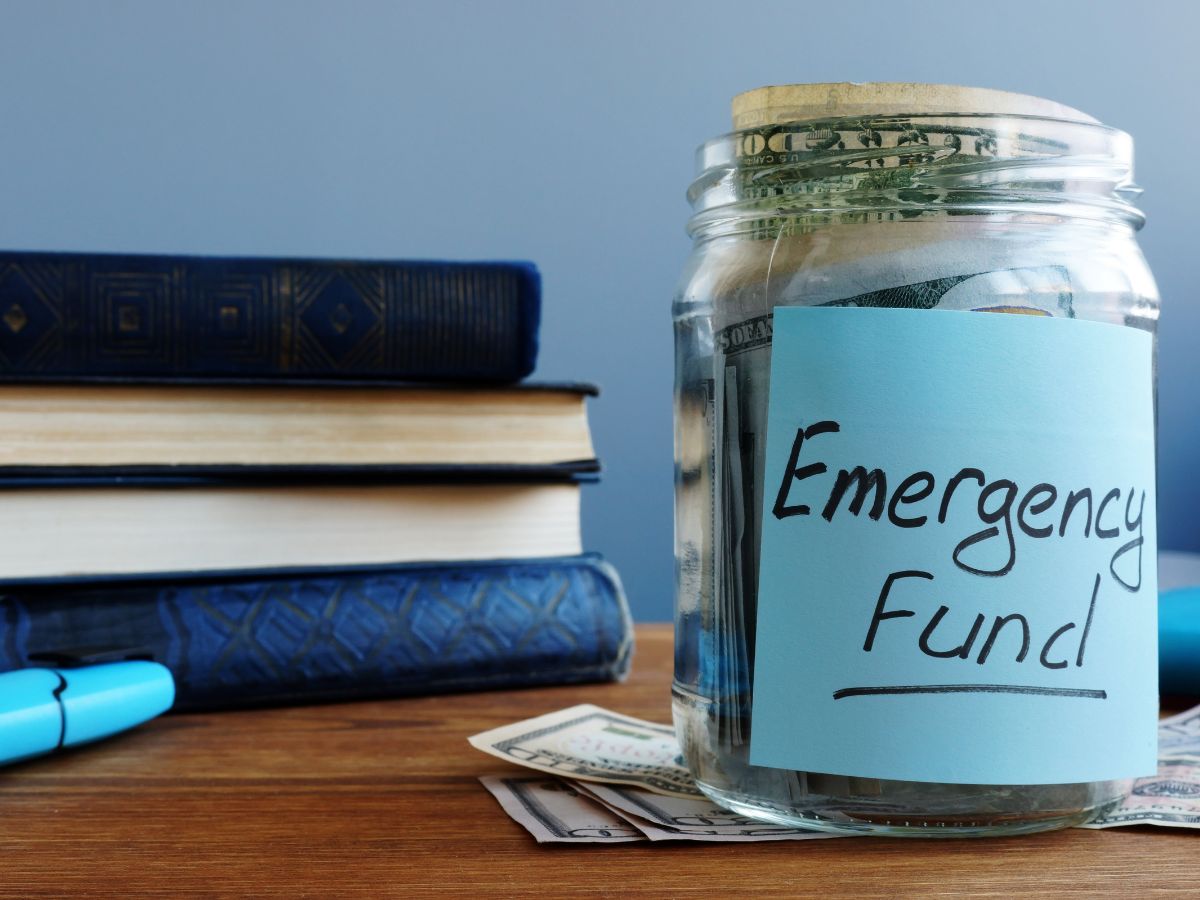
Emergency Fund: How Much Is Enough?

The definitive guide for Indian investors — how big your emergency fund should be, where to keep it, and when you can actually use it.
| Quick Summary — Emergency Fund in India • An emergency fund covers unexpected, unavoidable expenses when your income is disrupted. • Rule of thumb: 3 months of essential expenses (stable job); 6 months (self-employed/freelancer). • Common options people use in India: high-interest savings accounts (e.g. small finance banks), liquid mutual funds, or sweep-in FDs — not your salary account, not stocks. • Use only for genuine emergencies: job loss, medical bills, urgent repairs. • After using it, replenish before resuming any other financial goal. |
What Exactly Is an Emergency Fund?
If you have ever searched “how much emergency fund do I need in India“, you have probably found plenty of global rules but very few answers tailored to Indian realities — our job market, banking options, and family financial commitments. This guide fixes that.
An emergency fund is a dedicated pool of liquid savings set aside exclusively to cover your essential living expenses when something unexpected disrupts your income or creates a sudden large cost. Think of it as a financial circuit breaker — it stops one bad event from becoming a full-blown money crisis.
Most people confuse an emergency fund with regular savings. They are not the same. Regular savings have a goal — a vacation, a gadget, a down payment. An emergency fund has only one purpose: to be there when life goes sideways.
| Why this matters in India According to the Reserve Bank of India (RBI), household financial savings as a share of GDP have declined in recent years, even as household debt has risen. Most Indian families have less than one month of expenses as liquid savings — far below what any financial emergency demands. |
What counts as an emergency?
- Sudden job loss or salary cut — Rent, food, and EMIs still need to be paid.
- Unexpected medical bills — Even with health insurance, out-of-pocket costs can be significant.
- Major home or vehicle repair — A broken water pump or car engine cannot wait.
- Family emergency requiring travel — Last-minute flights and accommodation are expensive.
What does NOT count as an emergency?
- A sale on something you wanted to buy
- A planned annual expense like car insurance or school fee renewal
- A vacation or festival spend
- Upgrading a perfectly working phone or laptop

The 3–6 Month Rule Explained
The 3–6 month rule is the most widely used personal finance guideline globally. The logic is simple: if you lost your income today, how long would it take to replace it? In India, the average job search for a mid-level professional takes 2–4 months. Three months is the floor; six months is the true safety net.
How to calculate your target
The formula:
| Emergency Fund Formula Monthly essential expenses × Number of months = Emergency Fund Target Essential expenses: Rent/EMI + Groceries + Utilities + Insurance premiums + School fees + Loan EMIs + Basic transportation Exclude: Dining out | OTT subscriptions | Shopping | Entertainment |
Worked example — salaried professional in a metro city:
| Expense Category | Monthly (₹) | Annual (₹) |
| Rent | 25,000 | 3,00,000 |
| Groceries & household | 8,000 | 96,000 |
| Utilities (electricity, internet, water) | 3,000 | 36,000 |
| Health insurance premium | 2,500 | 30,000 |
| Home loan EMI | 18,000 | 2,16,000 |
| School fees (child) | 5,000 | 60,000 |
| Basic transportation | 3,500 | 42,000 |
| Total essential expenses | 65,000 | 7,80,000 |
| Target for this household3-month minimum: ₹65,000 × 3 = ₹1,95,0006-month recommended: ₹65,000 × 6 = ₹3,90,000 |
How Much Should YOU Save? (By Life Situation)
The 3–6 month range is a starting point. Your actual target should reflect your personal risk profile:
| Your Situation | Recommended Cover | Why |
| Salaried, government job, dual income household | 3 months | High job security, two income streams |
| Salaried, private sector, single income | 4–5 months | Job market exposure, no fallback income |
| Self-employed or freelancer in India | 6 months | Irregular income; client dry spells can last 2–3 months |
| Business owner | 6–9 months | Business costs may also need covering during slow periods |
| Single parent | 6 months | No second income to fall back on |
| Pre-retirement (55+) | 9–12 months | Re-employment is harder; health costs rise |
| High EMI load (EMIs > 40% of income) | 6 months | Missing EMIs triggers penalties and CIBIL score damage |

Where to Keep Your Emergency Fund in India
This is where most people go wrong. They park money in their salary account (where it gets spent) or a regular FD (where it gets locked). Your emergency fund must pass three tests: safe, liquid within 24–48 hours, and separate from your main account.
| Examples of options people use in India (May 2026 — for information only) 1. AU Small Finance Bank Savings Account — 7%+ interest above ₹1 lakh. Zero-balance option. Instant access. Commonly used for the first ₹1–2 lakh of an emergency fund. 2. Parag Parikh Liquid Fund — ~6.8–7% returns, T+1 redemption (1 business day). Regulated by SEBI / AMFI. Some investors use this for amounts above ₹2 lakh. 3. HDFC Liquid Fund — India’s largest liquid fund by AUM. ~6.5–7% returns. T+1 redemption. Another example used for larger corpus amounts. |
| Where to Keep It | What to Know |
| High-interest savings account(AU SFB, Jana SFB) | Offers 6–7%+ interest, fully liquid, and easy to keep separate from your salary account. Many people use small finance banks for this purpose. |
| Liquid mutual fund(Parag Parikh, HDFC, ICICI Pru) | Returns ~6.5–7%, T+1 redemption, SEBI-regulated. Some investors use this for amounts above ₹2 lakh. |
| Sweep-in FD(SBI, HDFC Bank, Axis Bank) | Offers FD interest rates with near-instant liquidity. A commonly used middle-ground option. |
| Regular savings account(your salary account) | Avoid. Too easy to dip into for daily spending. SBI/HDFC standard rate is just 2.7–3%. |
| Fixed Deposit (no sweep-in) | Avoid as primary fund. Withdrawal takes 3–7 days + 0.5–1% penalty. |
| Stocks or equity mutual funds | Not suitable. Value can drop 30–40% in a recession — the worst time to sell. |
| Cash at home | A small float (₹5,000–10,000) for instant needs is practical. Not suitable for the full fund. |
How to Build Your Emergency Fund: Step-by-Step
Building a full emergency fund from scratch feels overwhelming. Break it into three phases:
Phase 1 — Starter buffer (Month 1–2)
Goal: ₹25,000–₹50,000 as a first safety net.
- Open a separate zero-balance savings account at a different bank. Small finance banks such as AU Small Finance Bank or Jana SFB are examples that offer higher interest rates on savings accounts — do check current rates before opening.
- Set up an auto-transfer of ₹5,000–₹15,000 on salary day — before you can spend it.
- Redirect any windfalls (bonus, tax refund, gifts) straight into this account.
Phase 2 — Reach the 3-month mark (Month 3–8)
Goal: Hit your 3-month target — the minimum viable emergency fund.
- Audit expenses and cut non-essentials temporarily (OTT subscriptions, dining out).
- Put 50–70% of any annual bonus directly into the fund.
- Once the account crosses ₹2 lakh, some people move the excess to a liquid mutual fund (see our Mutual Fund Analysis Guide) for potentially better returns while keeping ₹1–2 lakh in an instantly accessible account. This is one approach — assess what suits your situation.
Phase 3 — Full fund and maintenance (Month 9 onwards)
Goal: Reach your 6-month target, then redirect savings to investing.
- Once you hit the 3-month mark, split surplus 50/50: half to the fund, half to SIP investments or NPS.
- Review the fund amount once a year — expenses change as lifestyle evolves.
- After any withdrawal, pause other savings goals and replenish first.
When Is It Okay to Use Your Emergency Fund?
Before withdrawing, apply this two-question test:
| The Two-Question Test 1. Is this expense truly unexpected? (If you knew 3 months ago, it is not an emergency.) 2. Is this expense unavoidable? (Can you negotiate it, delay it, or cover it another way?) Both answers must be YES before you touch the fund. |
| Situation | Use Emergency Fund? |
| Job loss — covering rent and groceries | Yes — exactly what it is for |
| Hospitalisation not covered by insurance | Yes — unavoidable and unexpected |
| Car engine failure (only commute vehicle) | Yes — cannot avoid without affecting income |
| Annual car insurance renewal | No — predictable; budget separately |
| Flight tickets for a wedding | No — plan as a separate goal |
| Phone screen cracked | No — use regular savings |
| Voluntary home renovation | No — save separately for this |
Common Mistakes to Avoid
- Keeping it in your salary account. Too easy to spend. Keep it at a separate bank.
- Setting the target too low. ₹10,000 is not an emergency fund — it is pocket change.
- Investing it in equity. Markets fall hardest during recessions — the worst time to sell.
- Not replenishing after use. Using it is fine. Not refilling it is dangerous.
- Counting your credit card limit. Credit card debt costs 36–42% per year. That is a debt trap, not a safety net.
- Never reviewing the target. If your expenses grew 20% in two years, your fund should too.
Emergency Fund vs Other Financial Goals: The Right Order
Should you build an emergency fund before starting SIPs or paying off debt? Here is the recommended sequence:
| Priority | Action | Why |
| 1st | Starter buffer (₹25,000–₹50,000) | Prevents small shocks from derailing everything else |
| 2nd | Pay off high-interest debt (credit cards, personal loans > 15%) | Saving 6% in FD while paying 40% on a credit card is irrational |
| 3rd | Build full 3-month emergency fund | Minimum protection before aggressive investing |
| 4th | Start investing (SIPs, PPF, NPS) | Compounding only works when your basics are secured |
| 5th | Expand to 6-month fund | Do this alongside investing — split surplus 50/50 |
Frequently Asked Questions
Can my FD serve as an emergency fund?
A regular FD works if it has a sweep-in facility. Without sweep-in, premature withdrawal takes 3–7 business days and attracts a 0.5–1% penalty. Some sweep-in FD options people use include SBI’s Multi-Option Deposit and HDFC’s FlexiDeposit, which combine FD interest rates with near-instant liquidity. Check current terms directly with your bank.
What if I have a home loan EMI? Should my fund be bigger?
Yes. Include your full EMI in the monthly expense calculation. Missing an EMI in India triggers penalty interest (typically 2% p.a. extra) and a CIBIL score hit. If your EMI is large relative to income, target 6 months before increasing SIP contributions.
Should I pause my SIP to build the fund faster?
For 3–6 months, yes — this is reasonable. The return lost on a paused SIP is far less costly than taking an emergency personal loan at 14–18% interest or redeeming equity at a loss. Restart the SIP the moment your 3-month minimum is reached.
Is ₹1 lakh enough as an emergency fund?
It depends entirely on your monthly expenses. For someone with ₹20,000 in essential expenses, ₹1 lakh covers 5 months — excellent. For someone with ₹60,000 in expenses, it barely covers 1.5 months — dangerously low. Always run the formula; never rely on a fixed rupee number.
What about using a liquid mutual fund instead of a savings account?
Liquid funds are one option people consider for the portion of their fund beyond ₹1–2 lakh. As examples, Parag Parikh Liquid Fund and HDFC Liquid Fund have historically offered ~6.5–7% returns with T+1 redemption — though past returns are not a guarantee. For smaller amounts needing truly instant access, a high-interest savings account at a small finance bank is one approach. Learn more about how funds work in our Mutual Fund Analysis Guide and Index Funds Explained.
How do I build an emergency fund if I am self-employed in India?
Self-employed individuals need 6–9 months of cover. In high-income months, set aside 20–30% of income before expenses. Keep the fund in a liquid mutual fund for better returns during months when you are not drawing on it. Platforms like Groww or Zerodha Coin make it easy to set up a liquid fund SIP.
Emergency fund vs SIP — which comes first?
Build a starter buffer of ₹25,000–₹50,000 first. Then start a small SIP (even ₹500/month) while simultaneously building your full emergency fund. Once you hit the 3-month target, increase the SIP. They are not competitors — they are partners. The emergency fund protects your SIP from being redeemed in a crisis.
| Key Takeaways 1. An emergency fund is the foundation of all personal finance — it is not optional. 2. Target 3 months minimum; 6 months if self-employed, freelancer, or carrying heavy EMIs. 3. Common options for storing it in India include high-interest savings accounts (e.g. small finance banks), liquid mutual funds, and sweep-in FDs — each has trade-offs; research before choosing. 4. Use only for genuine unexpected, unavoidable expenses. Apply the Two-Question Test first. 5. Replenish immediately after any withdrawal before resuming other goals.6. Review and increase the amount annually as your income and expenses grow. |
What to Read Next on NiveshKarlo
Now that your safety net is in place, explore these related guides:
- What is SIP in Mutual Funds and How Does It Work?
- National Pension Scheme (NPS): A Smart Way to Build Your Retirement Fund
- What is a Recurring Deposit Account?
- What Are Index Funds?
- Stocks vs Mutual Funds: Which Is Better?
- How to Analyse a Mutual Fund Before Investing
Sources & External References
The following authoritative sources support the data and guidance in this article:
- Reserve Bank of India (RBI) — Household savings and financial stability data
- Securities and Exchange Board of India (SEBI) — Regulation of mutual funds in India
- Association of Mutual Funds in India (AMFI) — Liquid fund category data and NAV information
- TransUnion CIBIL — How missed EMIs and loan defaults impact credit scores
- AU Small Finance Bank — Savings account interest rates (verify current rates before opening)
- PPFAS Mutual Fund — Parag Parikh Liquid Fund — Fund details and redemption process
- HDFC Mutual Fund — HDFC Liquid Fund — Fund AUM, returns, and redemption timelines
Disclaimer: This article is for educational and informational purposes only. It does not constitute financial advice, investment advice, or a recommendation to buy, sell, or invest in any financial product. All product names, banks, and mutual funds mentioned are examples to illustrate concepts — NiveshKarlo does not endorse or recommend any specific product, platform, or institution. Interest rates, fund returns, and product features are indicative as of May 2026 and are subject to change. Please conduct your own research and consult a SEBI-registered financial advisor before making any financial decision.

Hello there, my name is Phulutu, and I am the Head Content Developer at Nivesh Karlo. I have 13 years of experience working in fintech companies. I have worked as a freelance writer. I love writing about personal finance, investments, mutual funds, and stocks. All the articles I write are based on thorough research and analysis. However, it is highly recommended to note that neither Nivesh Karlo nor I recommend any investment without proper research, and to read all the documents carefully.